

Satyanarayan Puja is one of the most widely performed Hindu religious ceremonies, observed by families seeking blessings for peace, prosperity, happiness, and well-being. Whether you are celebrating a new beginning, moving into a new home, marking a family milestone, or expressing gratitude, performing Satyanarayan Puja in Delhi can be a meaningful way to connect with your faith and traditions.
Delhi is home to families from diverse cultural and regional backgrounds who celebrate Hindu festivals, auspicious occasions, and important life events. Finding the right pandit, arranging puja samagri, selecting an auspicious time, and understanding the rituals are essential steps when planning this ceremony.
Today, families can simplify these arrangements by using online puja booking services to find a suitable priest and discuss their requirements in advance.
In this complete guide, we explain the significance of Satyanarayan Puja, the rituals involved, the samagri required, suitable occasions for performing the puja, the booking process, and the factors that influence the cost of arranging a Satyanarayan Puja in Delhi.
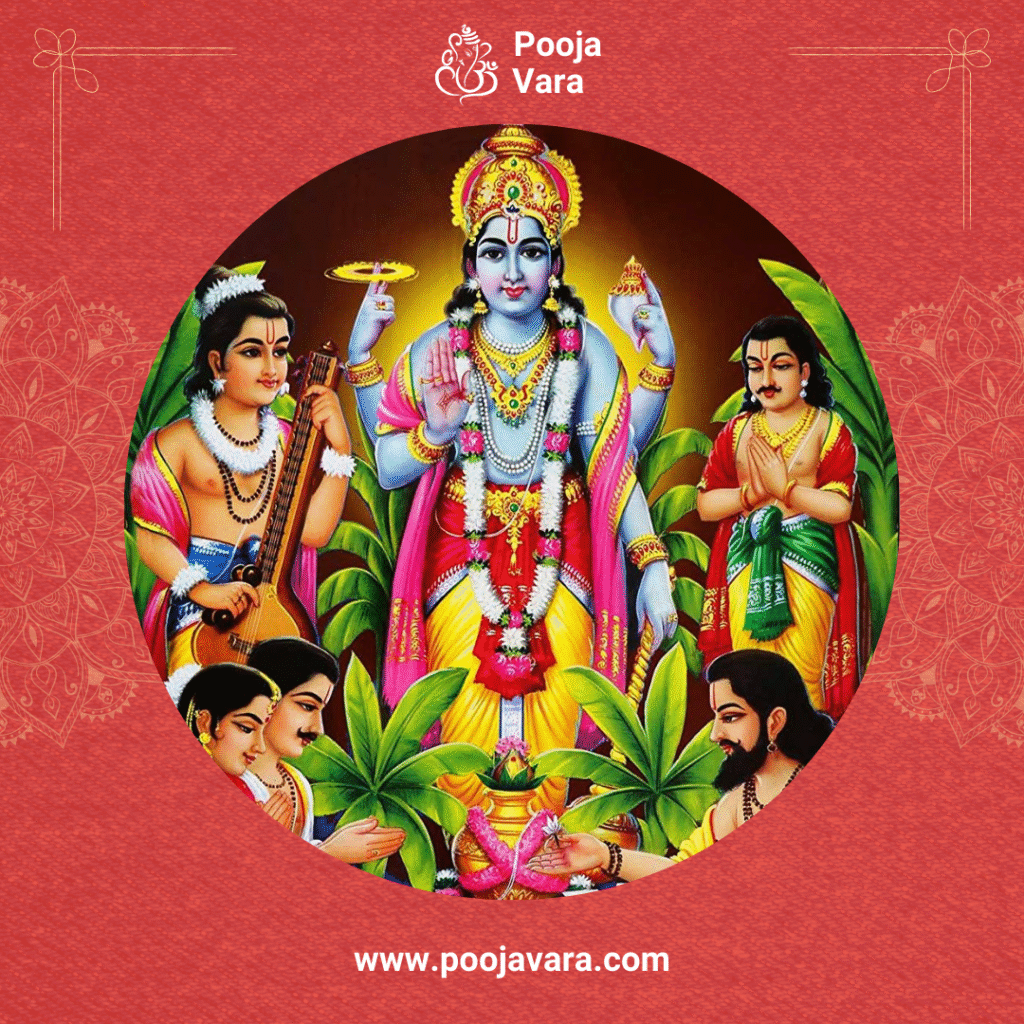
Satyanarayan Puja is a Hindu religious ceremony dedicated to Lord Satyanarayan, a benevolent form of Lord Vishnu associated with truth, righteousness, and devotion.
The puja typically includes prayers, offerings, the recitation or listening of the Satyanarayan Katha, and the distribution of prasad among family members and guests.
Many devotees perform this puja to express gratitude, seek divine blessings, and pray for harmony and prosperity in their lives.
The ceremony can be organized at home, in an apartment, at a temple, or at another suitable venue, depending on the family’s preferences and the priest’s guidance.
Families in Delhi may arrange Satyanarayan Puja for various occasions, including:
Housewarming ceremonies and Griha Pravesh.
Marriage anniversaries and family celebrations.
Birthdays and other personal milestones.
New business beginnings.
Festivals and auspicious days.
Expressions of gratitude after achieving an important goal.
General prayers for peace, happiness, and well-being.
The exact procedure may vary according to regional traditions, family customs, and the priest conducting the ceremony.
Lord Satyanarayan is worshipped as a form of Lord Vishnu. The word Satyanarayan is commonly understood in relation to truth and the divine.
The ceremony emphasizes devotion, gratitude, truthfulness, and the importance of fulfilling one’s commitments.
Devotees perform Satyanarayan Puja as an expression of faith and devotion. The prayers, mantras, and Katha provide an opportunity for family members to come together and reflect on religious teachings.
The puja often brings relatives and friends together for a shared spiritual experience. Listening to the Katha and participating in the rituals can help preserve family traditions across generations.
Some families perform the puja after purchasing a property, starting a business, completing an important milestone, or experiencing a significant life event.
Devotees seek blessings for peace, happiness, and prosperity. These are religious aspirations rather than guaranteed outcomes, and the ceremony’s meaning is rooted in faith and devotion.
Satyanarayan Puja can be performed on various auspicious occasions. The appropriate date and time may depend on family tradition, the purpose of the ceremony, and guidance from a knowledgeable priest.
Purnima is a popular occasion for performing Satyanarayan Puja. Many Hindu families observe the ceremony on the full moon day of the lunar month.
Families may arrange Satyanarayan Puja when moving into a new house. It can be performed as part of the housewarming celebrations, alongside other rituals if required.
If you are planning a housewarming, you can also explore Griha Pravesh Puja in Delhi to understand the associated ceremonies.
Some families perform the puja during festivals, religious observances, anniversaries, and other important occasions.
The ceremony may also be organized as an expression of gratitude after a personal or professional achievement.
How do you select the right muhurat?
Consult a priest and share your preferred date, location, and reason for performing the puja. If you require a specific muhurat, confirm it before finalizing your booking.
Avoid assuming that every Purnima or festival date automatically suits every family or ceremony.
Understanding the basic procedure can help you prepare for the ceremony and coordinate arrangements with your priest.
The following steps describe a common traditional format. The exact sequence may differ depending on the family’s customs and the priest’s prescribed procedure.
Begin by cleaning the designated area in your home or venue.
Arrange a clean puja platform, an appropriate image or idol of Lord Satyanarayan, seating for the priest and participants, and the necessary ritual materials.
Flowers, lamps, and other traditional decorations may be used according to your preferences and the priest’s instructions.
Sankalpam is the formal declaration of the devotee’s intention to perform the puja.
The priest guides the participants through the customary prayers and declarations associated with the ceremony.
The sankalpam may include details relating to the devotee, the occasion, and the purpose of the ritual.
Depending on the tradition, the ceremony may begin with prayers to Lord Ganesha and other deities.
These preliminary rituals help prepare for the main worship.
A kalash, or sacred vessel, may be prepared and installed as part of the ceremony.
The priest follows the relevant ritual procedure and recites the prescribed mantras.
The specific materials and method of kalash preparation can vary between traditions.
The main worship is dedicated to Lord Satyanarayan, a form of Lord Vishnu.
The priest guides the family through prayers, mantra recitation, and traditional offerings. Flowers, fruits, sandalwood paste, incense, and other items may be offered as prescribed.
Participants can follow the priest’s instructions throughout the ceremony.
The Satyanarayan Katha is an important part of the puja.
The traditional narrative is commonly presented in five main sections or chapters, with details depending on the version being followed.
The stories emphasize devotion, truthfulness, faith, gratitude, and the importance of respecting religious commitments.
Family members are encouraged to listen attentively and participate according to their tradition.
Prasad is prepared and offered to the deity as part of the ceremony.
A common preparation associated with Satyanarayan Puja is panchamrit or a sweet offering made with ingredients such as semolina, sugar, ghee, milk, and banana, depending on regional custom.
The exact recipe varies, so ask the priest which preparation is required.
The ceremony generally concludes with aarti and prayers.
The prasad is then distributed among family members, relatives, and guests.
Some families also arrange a meal or refreshments after the puja.
Preparing the required materials in advance helps prevent last-minute delays.
The following is a general checklist. The final list should be confirmed with your priest because requirements vary.
Category | Common items |
|---|---|
Puja setup | Puja platform, clean cloth, image or idol of Lord Satyanarayan |
Basic materials | Kumkum, turmeric, sandalwood paste, rice or akshata |
Worship items | Flowers, garland, incense, camphor, oil or ghee lamp |
Kalash materials | Kalash, water, mango leaves where customary, coconut |
Offerings | Fruits, bananas, betel leaves, betel nuts |
Prasad ingredients | Ingredients prescribed for the traditional sweet offering |
Additional items | Ghee, cotton wicks, plates, spoons, and other materials requested by the priest |
If you are booking through an online puja service, ask whether the package includes complete puja samagri or whether you must purchase the items separately.
This is particularly useful for families arranging the ceremony in apartments or unfamiliar locations in Delhi.
Finding a suitable priest is one of the most important parts of organizing the ceremony.
You can search for a Satyanarayan Puja pandit in Delhi through personal recommendations, local temples, or online puja booking platforms.
Follow these steps to arrange your booking.
Ask relatives and friends for recommendations, contact a nearby temple, or enquire through an online platform that offers Hindu puja services.
Review the available information and clarify any questions before making a commitment.
Provide the essential details:
Type of ceremony: Satyanarayan Puja.
Preferred date and time.
Full venue address or locality in Delhi.
Preferred language.
Family tradition or specific ritual requirements.
Whether you need samagri.
Approximate number of participants.
This information helps the provider assess availability and suggest an appropriate arrangement.
Ask whether the priest regularly performs Satyanarayan Puja and is familiar with your preferred ritual procedure.
If your family follows a specific regional tradition, explain this before booking.
Confirm the priest’s dakshina, travel expenses, samagri costs, and any additional charges.
Ask whether the quoted price covers the complete ceremony or only the priest’s services.
Once you agree on the details, request written confirmation.
Keep a record of the ceremony date, time, location, fees, service inclusions, and contact details. Reconfirm the arrangements before the scheduled day.
The cost of Satyanarayan Puja in Delhi depends on the service provider, ritual requirements, venue, and materials included.
There is no single fixed price that applies to every ceremony.
Factors that can influence the total cost include:
Priest’s dakshina and experience.
Duration of the puja.
Travel distance within Delhi NCR.
Whether puja samagri is included.
Additional rituals requested by the family.
Number of priests required.
Special arrangements or additional services.
For an accurate estimate, request an itemized quotation from the provider.
When comparing options, check whether each quotation includes the same services. A package that includes the priest, samagri, and travel may offer a different overall value from one that covers only the priest’s fee.
Online booking can make it easier to organize a religious ceremony, particularly for families with limited time.
You can enquire about availability and service inclusions without visiting multiple locations.
You can share your preferred date, location, and ceremony details in one enquiry.
Some providers offer puja packages that include the required ritual materials, reducing the need to purchase everything separately.
Depending on availability, a provider may help you find a priest who speaks your preferred language or follows your family’s regional customs.
Confirming the arrangements ahead of time gives you more opportunity to prepare the venue, inform guests, and organize prasad.
Remember to verify the provider’s services and booking terms before making payment.
Satyanarayan Puja is a meaningful Hindu ceremony through which families express devotion, gratitude, and prayers for peace and prosperity. Understanding the rituals, preparing the necessary samagri, selecting an appropriate time, and choosing a suitable priest can help you organize the ceremony with confidence.
Whether you are arranging the puja for a housewarming, a family celebration, an important milestone, or a personal religious observance, planning ahead can make the process simpler.
When booking a Satyanarayan Puja in Delhi, discuss your family’s traditions, preferred language, ceremony date, venue, samagri requirements, and budget with the priest or service provider. Confirm all arrangements before the day of the ceremony.
Planning Satyanarayan Puja in Delhi? Explore available puja services, enquire about an experienced pandit, and arrange the ceremony according to your family’s requirements.
Make your preparations easier with clear communication, thoughtful planning, and a priest who understands the rituals you wish to perform.
