

Vishnu Sahasranama Pooja in Chennai is a deeply revered Hindu devotional practice dedicated to Lord Vishnu, the preserver and protector of the universe. The term Vishnu Sahasranama refers to the sacred recitation of the thousand names of Lord Vishnu. Devotees traditionally perform this prayer to seek divine blessings, peace, spiritual strength, prosperity, and protection for themselves and their families.
For families in Chennai, arranging a Vishnu Sahasranama Pooja can be a meaningful way to observe an auspicious occasion, begin a new chapter in life, or simply dedicate time to prayer and devotion. With online pooja services becoming increasingly accessible, devotees can also arrange the required pandit, pooja samagri, rituals, and arrangements conveniently.
This complete guide explains the significance of Vishnu Sahasranama Pooja, how it is performed, its benefits, suitable occasions, required samagri, approximate process, and how devotees can arrange the pooja in Chennai.
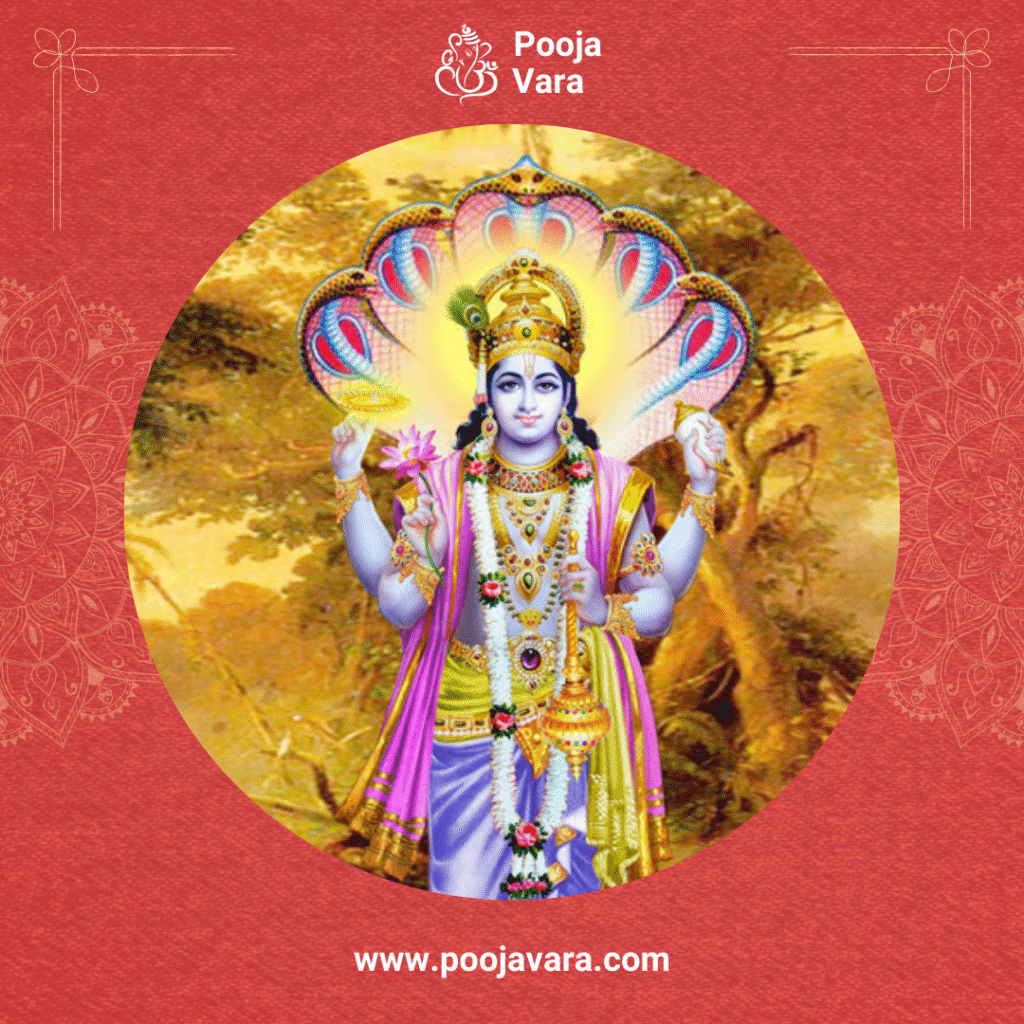
Vishnu Sahasranama is a devotional hymn consisting of 1,000 names of Lord Vishnu. It appears in the Anushasana Parva of the Mahabharata and is traditionally associated with Bhishma Pitamaha’s teachings to Yudhishthira.
Each name describes a particular quality, attribute, form, or divine aspect of Lord Vishnu. Reciting these names with devotion is considered an important spiritual practice in Vaishnava and broader Hindu traditions.
Vishnu Sahasranama Pooja in Chennai may include the recitation of the Sahasranama along with traditional prayers and other rituals according to the family’s tradition and the priest’s guidance.
The exact procedure can vary based on the sampradaya, family customs, temple tradition, and purpose of the pooja.
Lord Vishnu is traditionally worshipped as the preserver of the universe. Devotees turn to Vishnu worship for spiritual guidance, protection, stability, and inner peace.
The recitation of Vishnu Sahasranama is particularly valued because it combines devotion, meditation, prayer, and remembrance of the divine.
For many devotees, the significance of the pooja includes:
The benefits associated with religious rituals are matters of faith and tradition rather than scientifically guaranteed outcomes.
Chennai has a rich Hindu cultural and spiritual heritage, with numerous temples, priests, and families following traditional forms of worship.
Devotees may choose to perform Vishnu Sahasranama Pooja in Chennai at home, in a temple, or through a professionally arranged pooja service.
An organized service can be particularly useful for families who need assistance with:
If you are planning multiple rituals for an occasion, you can also explore related [Pooja Services in Chennai] and [Online Pandit Booking in Chennai] on your website.
There is no single occasion on which Vishnu Sahasranama must be performed. Devotees may recite or organize the pooja according to their family traditions and spiritual preferences.
Some occasions may include:
Devotees may organize Vishnu Sahasranama recitation as part of their regular spiritual practice.
Families may choose to perform Vishnu Sahasranama Pooja when seeking blessings for family well-being and harmony.
Some families may include Vishnu worship when starting a new phase of life, such as moving into a new home, starting a business, or beginning an important journey.
Devotees may perform Vishnu-related prayers on days considered auspicious according to their family or religious calendar.
Some devotees undertake Vishnu Sahasranama recitation as part of a personal devotional vow or prayer.
The most appropriate date and procedure can be discussed with a qualified priest based on the family’s tradition.
The exact Vishnu Sahasranama Pooja procedure may differ between traditions. A typical home ceremony may involve several of the following steps.
The area where the pooja will be conducted is cleaned and prepared. A picture or idol of Lord Vishnu, often accompanied by Goddess Lakshmi, may be placed on the altar.
The priest guides the devotees through the sankalpam, during which the purpose of the pooja and relevant details are traditionally stated.
The pooja begins with prayers invoking Lord Vishnu and seeking His blessings.
Depending on the tradition followed, a prayer to Lord Ganesha may be performed at the beginning to seek auspiciousness and remove obstacles.
The central part of the ceremony is the devotional recitation of the 1,000 names of Lord Vishnu.
The names can be recited by the priest, devotees, or collectively by family members and participants.
Traditional offerings such as flowers, tulsi leaves, fruits, water, and other items may be offered according to the ritual.
Tulsi is especially associated with Vishnu worship.
The ceremony may conclude with aarti and additional prayers seeking Lord Vishnu’s blessings.
Prasadam may be distributed among family members and participants after the pooja.
Because procedures differ by tradition, families should follow the instructions provided by their chosen priest.
The required Vishnu Sahasranama Pooja samagri can vary depending on the specific ritual.
Commonly required items may include:
The priest may provide a customized list depending on whether the ceremony includes additional rituals such as abhishekam, homam, or other offerings.
If you provide pooja samagri as part of your service, create an internal link such as [Pooja Samagri Services in Chennai] here.
Devotees traditionally associate Vishnu Sahasranama recitation with several spiritual benefits.
Regular devotional recitation can provide a structured period for prayer, reflection, and concentration.
Reciting the thousand names can encourage consistency in one’s spiritual practice.
Performing the pooja together can provide an opportunity for family members to participate in a shared religious tradition.
Devotees traditionally pray to Lord Vishnu for protection and guidance during different stages of life.
A Vishnu Sahasranama ceremony can create a peaceful and devotional atmosphere in the home.
It is important to understand these as traditional religious beliefs and devotional benefits, not guaranteed material or medical outcomes.
Arranging a pooja can be simple when the service provider offers complete coordination.
Select a date based on your family’s preference and, where applicable, consultation with a priest.
Decide whether you require only a pandit or a complete package including samagri and other arrangements.
You may need to provide information such as:
The service provider can coordinate the pandit and required materials.
Keep the pooja area clean and follow any preparation instructions provided by the priest.
Family members can participate in the rituals and Vishnu Sahasranama recitation according to the priest’s guidance.
Vishnu Sahasranama Pooja in Chennai offers devotees an opportunity to come together in prayer and devotion while reciting the sacred names of Lord Vishnu. Whether you are planning the ceremony for a family occasion, an auspicious beginning, a personal spiritual practice, or simply to seek blessings, understanding the procedure and requirements can make the experience more organized and meaningful.
From choosing the date and priest to arranging pooja samagri, home pooja services, and other requirements, a reliable pooja service can make the process convenient for your family.
If you are looking to arrange Vishnu Sahasranama Pooja in Chennai, book your pooja with a trusted service provider and discuss your requirements in advance to ensure that the ceremony follows your family’s traditions and preferences.
Looking for a convenient way to book a Vishnu Sahasranama Pooja in Chennai? Contact Poojavara to discuss your pooja requirements, priest booking, samagri, and other arrangements.
