

The Lalitha Sahasranama Pooja in Mumbai is a revered form of Devi worship dedicated to Goddess Lalitha Tripura Sundari, a manifestation of the Divine Mother in the Shakti tradition. Lalitha Sahasranama refers to the sacred recitation of the 1,000 names of Goddess Lalitha, traditionally associated with the Brahmanda Purana. The hymn describes different attributes and forms of the Divine Mother and is widely recited as part of Devi worship.
For devotees living in Mumbai, Lalitha Sahasranama Pooja can be performed at home, in a temple, or as part of a larger religious ceremony. It is commonly observed on Fridays, during Navratri, on Purnima (Full Moon), and on other days selected according to family tradition and the guidance of a qualified priest.
Whether you are planning Lalitha Sahasranama Pooja for spiritual practice, family worship, a special occasion, or a personal sankalpam, understanding the puja procedure, samagri, suitable muhurat and preparation can help you organize the ceremony smoothly.
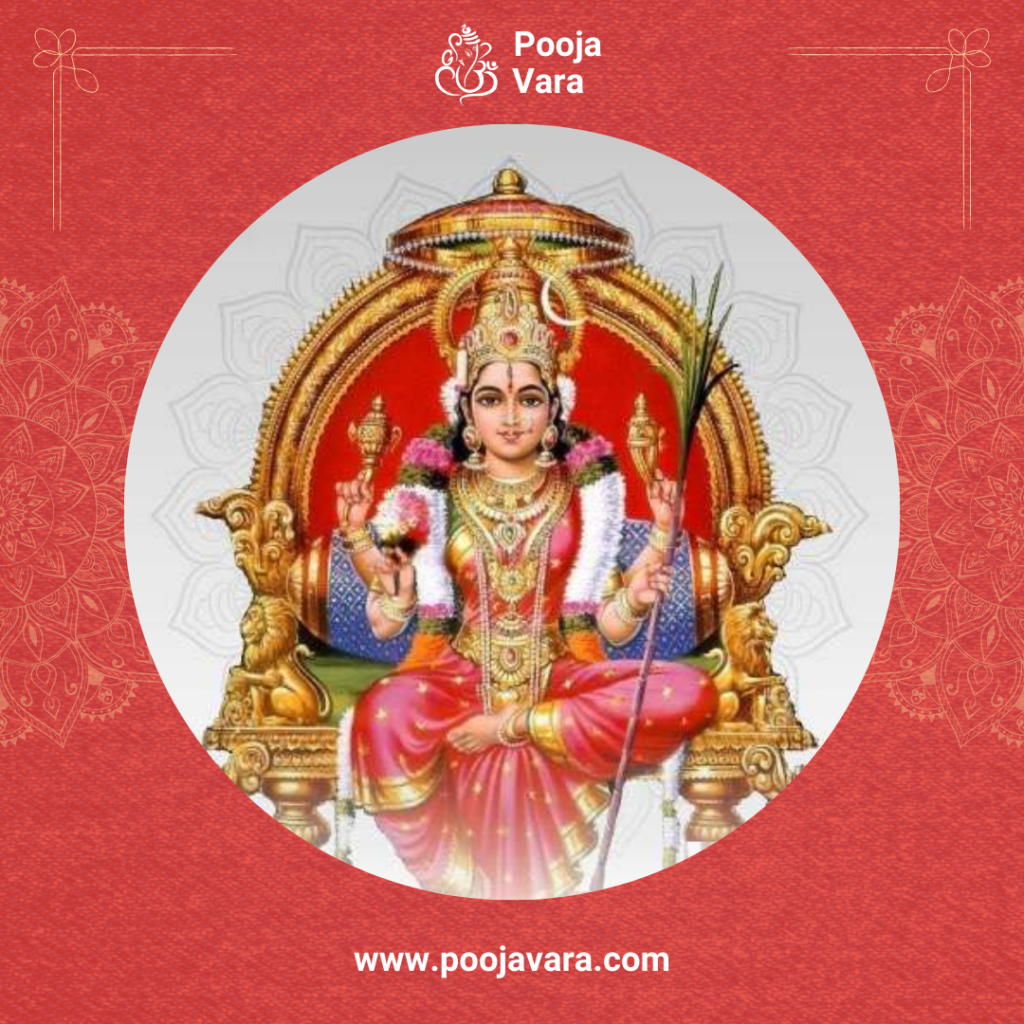
Lalitha Sahasranama Pooja is a form of worship in which devotees offer prayers to Goddess Lalitha Tripura Sundari along with the recitation of her 1,000 sacred names.
The Lalitha Sahasranama is traditionally connected with the Brahmanda Purana and is presented as a dialogue in which Lord Hayagriva teaches the sacred hymn to Sage Agastya.
The practice may be performed as a simple Lalitha Sahasranama Parayanam, or it can be incorporated into a more elaborate puja involving deity worship, sankalpam, offerings, kumkumarchana, naivedyam and aarti. The exact sequence can differ depending on the sampradaya, family tradition, priest and type of ceremony.
For people looking for Lalitha Sahasranama Pooja in Mumbai, the ceremony can be arranged at home with a priest, at a temple, or through a professional puja services.
Devotees undertake Lalitha Sahasranama recitation as a form of devotional practice, meditation and prayer. The repeated remembrance of the Divine Mother can provide a structured spiritual routine and an opportunity to spend time in prayer and reflection.
Traditional sources associate Lalitha Sahasranama recitation with qualities such as spiritual awareness, inner calm, devotion and positive transformation. These are traditional spiritual beliefs rather than medically or scientifically established outcomes.
Some devotees perform Lalitha Sahasranama Pooja with intentions such as:
The meaning and significance of the recitation can also encourage devotees to reflect on the different qualities represented by the names of Goddess Lalitha.
The exact Lalitha Sahasranama Pooja procedure may vary according to the priest and tradition. A typical household ceremony can include the following steps.
Before beginning the puja, devotees generally bathe and wear clean clothes. The puja area should be cleaned and arranged beforehand.
A clean and peaceful environment helps devotees focus on the worship without unnecessary distractions.
A picture or idol of Goddess Lalitha Tripura Sundari may be placed on a clean altar. In traditions where it is appropriate, a Sri Chakra or Sri Yantra may also be used.
A lamp, incense and flowers can be arranged near the deity.
The priest or devotee may perform sankalpam, formally stating the intention of the puja.
Depending on the tradition, details such as the devotee’s name, gotra, nakshatra and purpose of the worship may be included.
Many puja traditions begin with prayers to Lord Ganesha, seeking the removal of obstacles before proceeding with the main worship.
Additional preliminary rituals may be performed depending on the chosen puja vidhi.
The devotee meditates upon Goddess Lalitha Tripura Sundari and invokes her presence with prayers and appropriate mantras.
The central part of the ceremony is the recitation of the Lalitha Sahasranama, consisting of 1,000 names of the Goddess.
The names may be recited as a stotram or namavali according to the selected tradition. Some ceremonies also include offerings such as flowers or kumkum during the recitation.
In some forms of Lalitha Devi worship, kumkumarchana is performed by offering kumkum while chanting the names or mantras associated with the Goddess.
The exact method should be followed according to the priest’s guidance and the tradition being observed.
Food, fruits, sweets or other suitable offerings are presented as naivedyam to the Goddess.
The specific offerings can vary according to family customs and the type of puja.
The ceremony generally concludes with Devi aarti, followed by prayers and distribution of prasadam.
For a simple Lalitha Sahasranama recitation, the entire practice may be considerably shorter than an elaborate puja or homam. A single recitation is commonly described as taking around 45–60 minutes, although the overall ceremony can take longer depending on the accompanying rituals.
The Lalitha Sahasranama Pooja samagri depends on the specific puja vidhi selected. It is a good idea to confirm the final list with your priest before purchasing specialized items.
Common items may include:
If a more elaborate ritual or Lalitha Sahasranama Homam is being conducted, additional homam-related materials will be required. The priest should provide the specific list because requirements can differ by tradition.
Lalitha Sahasranama Pooja in Mumbai offers devotees an opportunity to dedicate time to prayer, devotion and the remembrance of Goddess Lalitha Tripura Sundari. Whether you choose a simple home recitation or a formal puja with a priest, preparing the required Lalitha Sahasranama Pooja samagri, selecting a suitable date and understanding the ceremony beforehand can make the experience more organized.
Fridays, Navratri and Purnima are commonly associated with this form of Devi worship, although the appropriate Lalitha Sahasranama Muhurat can depend on your family tradition and the specific ceremony being performed.
If you are planning to perform Lalitha Sahasranama Pooja in Mumbai, Poojavara can help you explore suitable puja arrangements, priest services and related devotional services.
Book your Lalitha Sahasranama Poojain Mumbai and make your sacred occasion easier to organize with the right priest and puja arrangements.
