

Lalitha Sahasranama Pooja is a revered form of Devi worship dedicated to Goddess Lalitha Tripura Sundari, the Divine Mother in the Shakti tradition. The central practice involves reciting or chanting the Lalitha Sahasranama, a sacred hymn consisting of 1,000 names of Goddess Lalitha. The hymn is traditionally associated with the Lalitopakhyana section of the Brahmanda Purana, where Hayagriva teaches the thousand names to Sage Agastya.
For devotees in Chennai, Lalitha Sahasranama Pooja can be a meaningful way to observe Devi worship at home, during special occasions, or as part of a temple or community prayer. Depending on the tradition followed, the worship may include Lalitha Sahasranama Parayanam, Kumkum Archana, Shodashopachara Pooja, offerings, devotional chanting and Aarti.
This complete guide explains the significance, procedure, benefits, suitable occasions, preparations and important considerations when arranging Lalitha Sahasranama Pooja in Chennai.
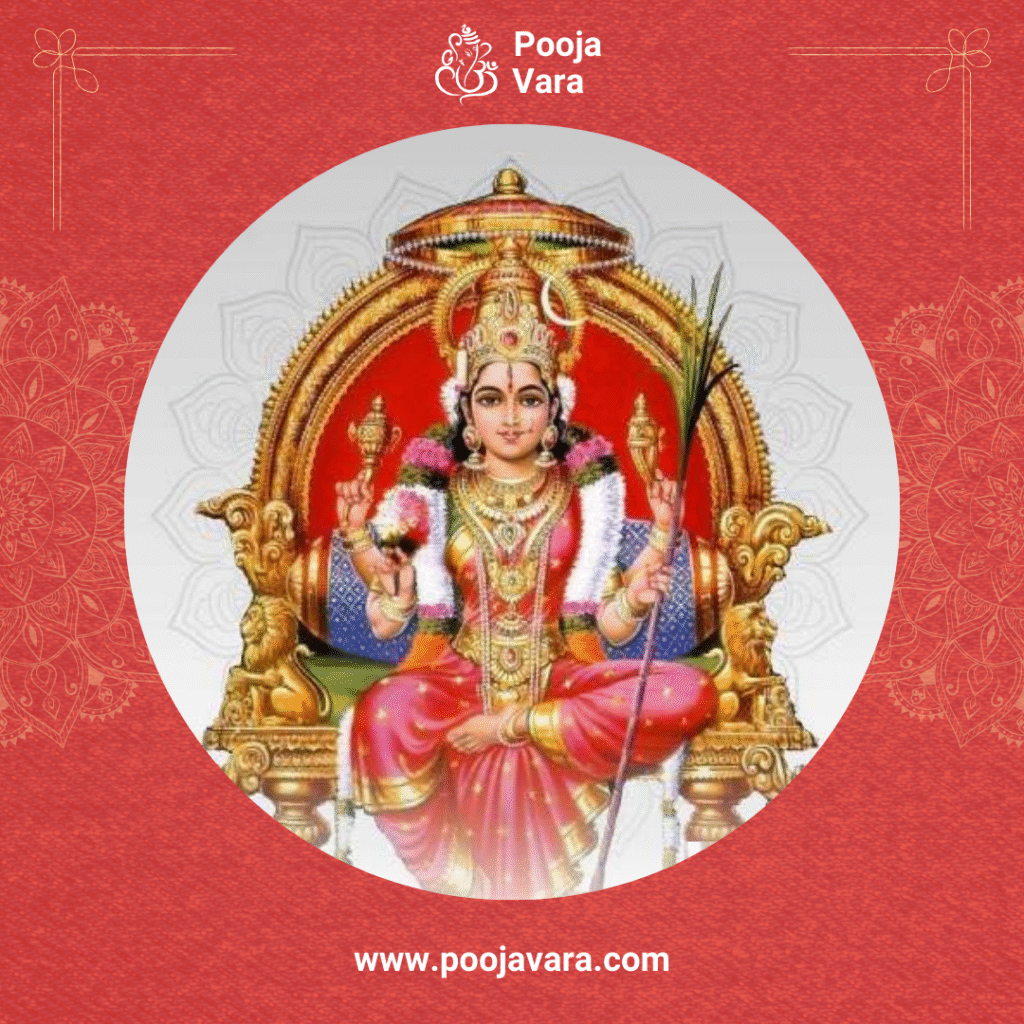
Lalitha Sahasranama Pooja is a devotional worship practice centered around the recitation of the 1,000 names of Goddess Lalitha Devi.
The term Sahasranama means “a thousand names.” Each name describes an aspect, quality or attribute associated with the Goddess. The Lalitha Sahasranama is traditionally presented as a hymn of 1,000 names and is used in different forms of Devi worship, including recitation and archana.
In a typical Lalitha Sahasranama Pooja, devotees may worship a deity image, idol or Sri Chakra and offer items such as flowers, kumkum, fruits and other traditional offerings while reciting the names.
The exact procedure can differ according to family tradition, temple practice and the priest conducting the pooja.
Lalitha Sahasranama occupies an important place in Shakti and Sri Vidya devotional traditions. The hymn describes different attributes and forms of Goddess Lalitha Devi through 1,000 names.
For devotees, chanting the Sahasranama can be a form of focused prayer and meditation. The rhythmic recitation can also help create a peaceful devotional atmosphere.
A particularly distinctive feature traditionally associated with the Lalitha Sahasranama is that the 1,000 names are recited as a structured sacred hymn rather than simply being a list of ordinary descriptive names. Some Sri Vidya traditions also treat the individual names as sacred mantric expressions.
Chennai has a strong cultural and devotional connection with Hindu temples, classical music, Sanskrit and Tamil devotional traditions. Families may choose to conduct Devi poojas at home or seek assistance from experienced priests and pooja service providers.
Arranging a Lalitha Sahasranama Pooja in Chennai can be suitable when you want a structured devotional ceremony without having to organize every ritual component yourself.
A professional pooja service may help with:
Before booking, it is useful to confirm exactly which services and materials are included in the package.
Devotees perform Lalitha Sahasranama Pooja for different spiritual and devotional reasons. Benefits are traditionally understood in a religious context rather than as scientifically established outcomes.
Reciting the 1,000 names encourages devotees to focus their attention on Goddess Lalitha and devotional practice.
The repetitive rhythm of devotional chanting can create a calm atmosphere and provide an opportunity for meditation and reflection.
Regular recitation can help devotees develop a consistent spiritual practice centered on Devi worship.
Lalitha Sahasranama Pooja can also become a family devotional activity, allowing family members to participate in chanting, archana and other rituals.
Many devotees choose Devi worship during spiritually significant days, festivals, family occasions or periods when they wish to offer prayers and gratitude.
Some Sri Vidya organizations conduct Lalitha Sahasranama Kumkumarchana as group worship, demonstrating how the Sahasranama can be incorporated into collective devotional ceremonies.
The exact procedure varies according to tradition and the priest’s method. A general ceremony may include the following stages.
The pooja space is cleaned and prepared before the ceremony. Devotees generally take a bath and wear clean traditional or comfortable clothing.
An image or idol of Goddess Lalitha Devi is placed on the altar. Depending on the tradition, a Sri Chakra or Sri Yantra may also be used.
The altar may be decorated with flowers, lamps and traditional items.
The ceremony may begin with prayers to Lord Ganesha to seek blessings for the successful completion of the ritual.
The devotee or priest makes a Sankalpam, formally stating the intention of performing the pooja.
The sankalpam may include details such as the devotee’s name, family and purpose of the prayer.
A kalasha may be prepared and worshipped as part of the ritual according to the tradition being followed.
The main worship of Goddess Lalitha Devi is performed with traditional offerings.
The priest and/or devotees recite the Lalitha Sahasranama.
The complete text contains 1,000 names arranged across 182 shlokas in commonly presented editions.
In many forms of Lalitha Devi worship, Kumkum Archana is performed by offering kumkum while reciting the names of the Goddess.
The exact archana method may vary depending on the priest and tradition.
The ceremony concludes with Aarti and distribution of prasadam to the devotees.
The exact list depends on the pooja method, but commonly used items can include:
If you are booking Lalitha Sahasranama Pooja services in Chennai, ask the service provider whether pooja samagri is included or needs to be arranged separately.
Devotees may perform Lalitha Sahasranama worship according to their family tradition and spiritual practice.
It may be arranged for:
There is no single universal schedule applicable to every Lalitha Sahasranama worship tradition. Some traditional guides specifically recommend Friday for regular practice, while organized Sri Vidya events may be conducted on different auspicious occasions.
Therefore, it is best to consult the priest or follow your family’s established tradition.
One of the convenient options for Chennai families is to conduct the ceremony at home.
A home pooja allows family members to participate directly and can provide a familiar devotional environment.
Before arranging the ceremony, consider:
Select a clean, quiet area where the altar can remain undisturbed throughout the pooja.
Ask the priest whether the ceremony includes only Sahasranama recitation or a complete Devi Pooja with Kumkum Archana and other rituals.
Confirm the required samagri in advance. This avoids last-minute arrangements.
Family members can decide whether they want to participate in the chanting, archana or other portions of the ceremony.
Lalitha Sahasranama Pooja is a deeply devotional form of Goddess Lalitha worship centered on the recitation of her 1,000 sacred names. Whether performed as a regular family prayer, a special devotional ceremony or a structured Kumkum Archana, it offers devotees an opportunity to spend meaningful time in prayer and contemplation.
If you are planning Lalitha Sahasranama Pooja in Chennai, prepare the pooja space, confirm the ritual procedure, arrange the required samagri and choose a priest or pooja service provider who can clearly explain the ceremony.
For families looking for convenient and organized online pooja booking in Chennai, consider choosing a service that can assist with priest arrangements, pooja samagri and the complete ceremony according to your requirements.
Planning a Lalitha Sahasranama Pooja in Chennai? Contact Poojavara to discuss your pooja requirements and arrange a suitable ceremony for your family.
