

Durga Puja is one of the most spiritually significant festivals dedicated to Goddess Durga, the divine embodiment of शक्ति (Shakti), courage, protection and victory over evil. In Mumbai, the festival takes on a unique character, blending traditional Bengali Durga Puja celebrations with the wider customs of Shardiya Navratri followed by Hindu communities across the city.
Whether you are planning a Durga Puja at home in Mumbai, arranging a community celebration, looking for the right Durga Puja muhurat, preparing the required Durga Puja samagri, or searching for an experienced pandit for Durga Puja in Mumbai, proper planning can make the ceremony peaceful and spiritually meaningful.
In this complete guide, you will learn about the Durga Puja dates in Mumbai, important rituals, puja vidhi, auspicious timings, samagri list, Ashtami and Navami rituals, and how to book a qualified pandit for your ceremony.
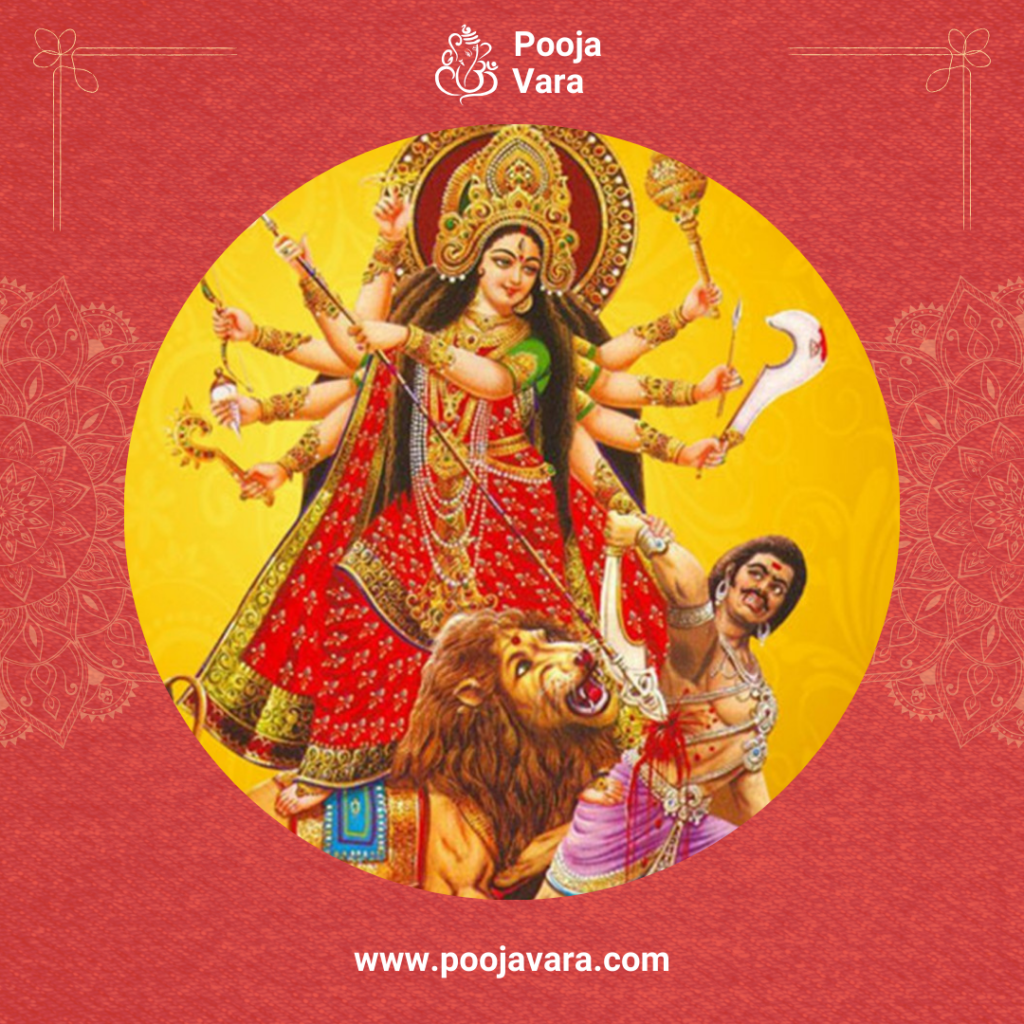
Durga Puja is a Hindu festival celebrating Goddess Durga and her victory over Mahishasura, symbolising the triumph of good over evil. Traditionally, Durga Puja is observed across several days, with the principal days being Shashthi, Saptami, Ashtami, Navami and Vijayadashami.
In Mumbai, it is important to understand that the term “Durga Puja” can refer to two closely related traditions:
According to the 2026 Mumbai Durga Puja calendar, the principal five-day Durga Puja period begins on 16 October 2026 with Shashthi and continues through 20 October 2026, Vijayadashami.
The exact rituals and timings can differ according to family tradition, regional customs, sampradaya and the local Panchang. Therefore, families should confirm the final Durga Puja muhurat in Mumbai with their pandit before beginning the ceremony.
If you are planning Durga Puja in Mumbai in 2026, the main festival days are:
| Puja Day | Date | Major Rituals |
|---|---|---|
| Maha Shashthi | 16 October 2026 | Kalparambha, Bodhan, Amantran & Adhivas |
| Maha Saptami | 17 October 2026 | Nabapatrika/Kolabou Puja |
| Maha Ashtami | 19 October 2026 | Durga Ashtami, Kumari Puja, Sandhi Puja |
| Maha Navami | 20 October 2026 | Navami Puja, Homa and associated rituals |
| Vijayadashami | 20 October 2026 | Durga Visarjan, Sindoor Utsav |
The 2026 calendar identifies 16 October as Shashthi, 17 October as Saptami, 19 October as Ashtami, 20 October as Navami and later Dashami/Vijayadashami on the same calendar period. Festival observances can overlap because of tithi calculations, so the precise ceremony schedule should be checked against the local Mumbai Panchang.
Hindu rituals traditionally use tithi, nakshatra, yoga and local sunrise/sunset calculations to determine auspicious periods. The correct time can therefore change depending on the location.
For a home ceremony, your pandit may determine the appropriate time for:
Rather than following a generic internet timing, it is advisable to ask a qualified Mumbai pandit to calculate or verify the appropriate local muhurat for your specific ceremony.
A traditional Durga Puja consists of several rituals. The exact sequence may vary depending on the tradition followed by the family or community.
Lord Ganesha is worshipped at the beginning of the ceremony as the remover of obstacles. The pandit performs prayers and offerings before proceeding with the main Durga Puja.
The devotee makes a formal Sankalp, stating the intention of performing the puja. The sankalp may include the devotee’s name, family details, location and purpose of the worship.
A sacred Kalash is established as part of the worship. It represents auspiciousness, abundance and the divine presence.
Depending on the tradition, the Kalash may be decorated with mango leaves, coconut, sacred thread and other ritual items.
Durga Avahan is the invocation of Goddess Durga. The pandit recites prescribed mantras and prayers while invoking the divine presence of Maa Durga.
This is one of the most important parts of the ceremony because it formally establishes the devotional focus of the puja.
The Goddess may be worshipped through Shodashopachara, a traditional sixteen-step method of offering respect and devotion.
The offerings can include:
The exact procedure depends on the ritual tradition being followed.
Maha Ashtami is one of the most important days of Durga Puja. Devotees offer special prayers to Goddess Durga and may perform additional rituals such as Kumari Puja and Havan.
Ashtami is especially significant for devotees seeking divine strength, protection and removal of obstacles.
In traditions where it is observed, young girls are worshipped as manifestations of the Divine Mother.
Their feet may be respectfully washed and they may be offered food, flowers, gifts and other traditional offerings.
Sandhi Puja is associated with the transition between Ashtami and Navami. It is considered a highly significant period in the Durga Puja tradition.
Because Sandhi Puja depends on the exact tithi transition, the timing should be calculated using the local Panchang rather than relying on a fixed clock time.
A Havan may be performed as part of Ashtami or Navami worship. Offerings are made into the sacred fire while appropriate mantras are recited by the pandit.
If you are planning a home Havan in Mumbai, make sure there is sufficient ventilation and a safe, suitable area for the fire ritual.
The ceremony concludes with Durga Aarti, prayers and distribution of Prasad among family members and devotees.
Preparing the samagri in advance can prevent last-minute stress, particularly during the busy festival period in Mumbai.
The exact list should always be confirmed with your pandit because requirements differ by ritual tradition.
Common items may include:
If your Durga Puja includes Havan, additional materials may include:
For Bengali-style Durga Puja, Nabapatrika/Kolabou Puja is an important Saptami ritual. The materials and preparation can be quite specific, so it is better to ask your priest to provide a tradition-specific list rather than using a generic Navratri samagri checklist.
If you are conducting Durga Puja at home, preparation is just as important as the ceremony itself.
Clean the room or designated puja area thoroughly before the ceremony. Keep the space uncluttered and peaceful.
Cover the chowki with a clean cloth and arrange the idol, Kalash and other required items according to your pandit’s instructions.
Place frequently used items together in separate containers. This makes it easier for the pandit and family members during the ceremony.
If you are inviting a pandit from another part of Mumbai, confirm the arrival time in advance. Mumbai traffic can affect travel time, especially during major festivals.
Ask your pandit:
Durga Puja in Mumbai is much more than a religious ceremony. It is an opportunity for families to come together, express devotion to Maa Durga and seek blessings for strength, prosperity, protection and well-being.
Whether you are planning a small Durga Puja at home, a special Durga Ashtami Puja, a complete Navratri ceremony or a community celebration, advance preparation can make the experience more meaningful.
Start by deciding your tradition and rituals, confirming the Durga Puja muhurat, arranging the puja samagri, and booking a knowledgeable pandit in Mumbai well in advance.
Looking for a trusted pandit for Durga Puja in Mumbai? Contact us today to discuss your preferred date, location, rituals and samagri requirements and arrange your puja with experienced Vedic guidance.
The principal Durga Puja period in Mumbai in 2026 begins with Maha Shashthi on 16 October 2026 and concludes around Vijayadashami on 20 October 2026, subject to local tithi calculations.
The auspicious time depends on the specific ritual, tithi, local Panchang and family tradition. It is recommended to confirm the exact Durga Puja muhurat in Mumbai with a knowledgeable pandit.
Yes. Durga Puja can be performed at home when the appropriate rituals, samagri and procedures are arranged according to your tradition.
Common items include a Durga idol or image, Kalash, coconut, mango leaves, flowers, kumkum, turmeric, rice, incense, lamps, fruits, Naivedya and other ritual materials. The exact samagri list depends on the puja tradition and rituals included.
If you are unfamiliar with the rituals, mantras or muhurat, booking an experienced pandit can make the ceremony much easier and help ensure that the traditional procedures are followed properly.
