

Vishnu Sahasranama Pooja is a sacred Hindu devotional practice dedicated to Lord Vishnu, the preserver and protector of the universe. The term Vishnu Sahasranama means “the thousand names of Lord Vishnu.” Reciting these names is an important part of Hindu devotional tradition, as devotees seek divine blessings, peace of mind, spiritual growth, and prosperity through sincere prayer.
If you are planning a Vishnu Sahasranama Pooja in Delhi, understanding the rituals, significance, preparation, and booking process can help you organize the ceremony according to your family’s traditions. Whether you wish to perform the pooja at home, during a religious occasion, on an auspicious day, or as part of a special family ceremony, an experienced Hindu priest can guide you through the procedure.
Delhi is home to families who follow different Hindu traditions, and many devotees prefer personalized pooja arrangements that accommodate their language, customs, and schedules. Online pooja booking services can make it easier to find a suitable priest and discuss the arrangements in advance.
In this complete guide, we will explore the significance of Vishnu Sahasranama Pooja, its traditional procedure, important occasions, required samagri, benefits, approximate costs, and how to book a priest for Vishnu Sahasranama Pooja in Delhi.
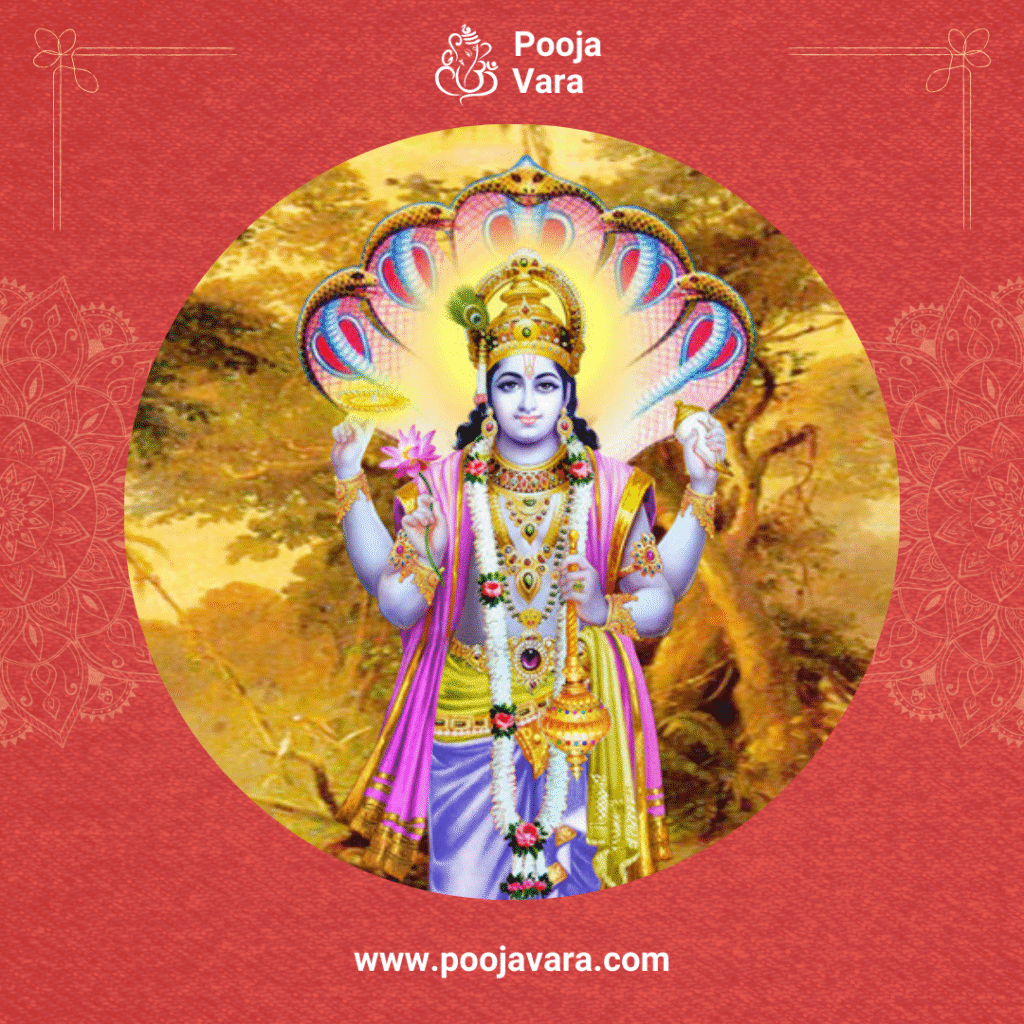
Vishnu Sahasranama is a revered Sanskrit hymn containing a thousand names of Lord Vishnu. It appears in the Anushasana Parva of the Mahabharata and is traditionally associated with the teachings of Bhishma to Yudhishthira.
Each name describes a divine quality, attribute, form, or aspect of Lord Vishnu. Devotees recite or listen to the hymn as an expression of faith, gratitude, and devotion.
Vishnu Sahasranama Pooja combines the recitation of these sacred names with prayers and devotional offerings to Lord Vishnu. Depending on the family tradition and the priest’s guidance, the ceremony may include the worship of Lord Vishnu, the chanting of mantras, the offering of flowers, and the recitation of the complete Vishnu Sahasranama.
The exact procedure may vary according to the devotee’s tradition, the occasion, and the scope of the ceremony.
Lord Vishnu is worshipped in Hinduism as the preserver of the universe and the protector of dharma. Devotees believe that sincere worship and the recitation of Vishnu Sahasranama help them cultivate devotion, humility, discipline, and a deeper connection with the divine.
The primary purpose of Vishnu Sahasranama Pooja is to express devotion to Lord Vishnu. Chanting his thousand names allows devotees to reflect on his divine qualities and significance.
Many devotees incorporate Vishnu Sahasranama recitation into their regular prayer routines because the structured chanting can provide a calming and focused devotional experience.
Families may arrange this pooja to pray for harmony, happiness, health, and general well-being. The ceremony can also provide an opportunity for family members to participate in a shared spiritual practice.
Regular recitation encourages consistency in prayer and creates time for reflection. Some devotees choose to recite Vishnu Sahasranama daily, while others arrange a priest-led ceremony on special occasions.
These are spiritual and devotional purposes rather than guaranteed material or medical outcomes.
Delhi offers access to Hindu temples, priests, and religious service providers who may conduct Vishnu Sahasranama Pooja at homes or other suitable venues.
Families may arrange this pooja for several reasons:
To celebrate an auspicious occasion.
To mark a birthday, anniversary, or family milestone.
To begin a new chapter in life with prayers and devotion.
To include a traditional ceremony during a housewarming.
To pray for peace, harmony, and the well-being of family members.
To observe a religious day dedicated to Lord Vishnu.
To establish a regular devotional practice at home.
If you are looking for Vishnu Sahasranama Pooja in Delhi, discuss your intention with the priest so the ceremony can be planned according to your requirements and preferred tradition.
Vishnu Sahasranama can be recited on many days, and devotees may choose an occasion based on personal faith, family customs, or guidance from a priest.
Ekadashi is traditionally associated with the worship of Lord Vishnu. Many devotees observe fasting, prayers, and Vishnu-related devotional practices on these lunar days.
Vaikuntha Ekadashi is an important occasion for many Vaishnava devotees. Some families choose to recite Vishnu Sahasranama as part of their prayers on this day.
Purnima, or the full moon day, is considered auspicious for various Hindu devotional activities. Families may choose this day for a Vishnu Sahasranama recitation according to their traditions.
Some families organize the pooja to mark a birthday, wedding anniversary, or other important milestone, offering prayers for continued well-being.
Vishnu Sahasranama recitation may also be included in a broader religious programme during a housewarming or another significant family occasion.
There is no single date that every family must follow. If you prefer a particular muhurat, consult a knowledgeable priest about the date and time suitable for your ceremony.
The procedure for Vishnu Sahasranama Pooja can vary by tradition. A priest can explain the specific steps before the ceremony. The following is a general outline of how a home-based pooja may be conducted.
Clean the designated area and arrange a suitable place for the worship of Lord Vishnu. A picture or idol of Lord Vishnu may be placed on a clean altar.
Prepare the necessary flowers, lamps, offerings, and other materials before the ceremony begins.
The priest may guide the family through Sankalpam, a traditional statement of intention for the ceremony. This establishes the purpose of the pooja and may include relevant details about the devotee and the occasion.
The ceremony may begin with prayers to Lord Ganesha and other preliminary rituals, depending on the tradition followed.
The priest then guides the worship of Lord Vishnu.
The priest performs the prescribed worship using offerings such as flowers, sandalwood paste, incense, a lamp, and other materials appropriate to the ritual.
The offerings and mantras depend on the family’s tradition and the scope of the ceremony.
The central part of the ceremony is the recitation of the thousand names of Lord Vishnu.
The priest may chant the complete hymn, with devotees listening or joining in if they know the verses. A printed text or prayer book can help participants follow the recitation.
The duration depends on the chanting pace, the number of repetitions, and any additional rituals included.
Food offerings or naivedyam may be presented to the deity according to the family’s tradition. Fruits and other suitable offerings may also be arranged.
The ceremony may conclude with aarti, final prayers, and the distribution of prasadam to participants.
The priest can explain any concluding rituals or customary practices relevant to your family.
Vishnu Sahasranama Pooja is a meaningful devotional practice for those who wish to worship Lord Vishnu and incorporate traditional prayers into their family and spiritual lives. Understanding the pooja’s significance, procedure, required materials, and booking process can help you prepare for the ceremony with confidence.
If you are planning Vishnu Sahasranama Pooja in Delhi, start by choosing your preferred date, deciding whether you need recitation alone or a complete Vishnu Pooja, and discussing your family’s traditions with an experienced priest. Confirm the samagri requirements, ceremony duration, total fees, and booking arrangements in advance.
Online puja services may also help you find a suitable priest and coordinate the necessary preparations.
Planning Vishnu Sahasranama Pooja in Delhi? Explore available priest booking and puja services, share your requirements, and arrange a ceremony that reflects your family’s traditions and devotion to Lord Vishnu.
May your prayers bring peace, devotion, and spiritual fulfilment to your home.
