

Celebrating major milestones in life has always been deeply rooted in Indian tradition. Among these sacred milestones, Sashtiapthapoorthi holds a unique and divine place. It marks the completion of 60 years of life, a powerful moment that symbolizes rebirth, renewal, and spiritual awakening. In Hindu culture, reaching the age of 60 is not just a birthday celebration—it is a deeply sacred ritual blessed by scriptures, sages, and ancestral wisdom.
This ceremony is believed to restore physical, emotional, and spiritual balance, bestowing divine strength, longevity, and harmony in family life. Today, many families celebrate Sashtiapthapoorthi with great devotion, often making it a grand event that combines religious poojai, family gatherings, and spiritual blessings.
In this article, we will explore What is Sashtiapthapoorthi, its meaning, history, spiritual purpose, rituals performed, benefits, and why it is important in modern life.
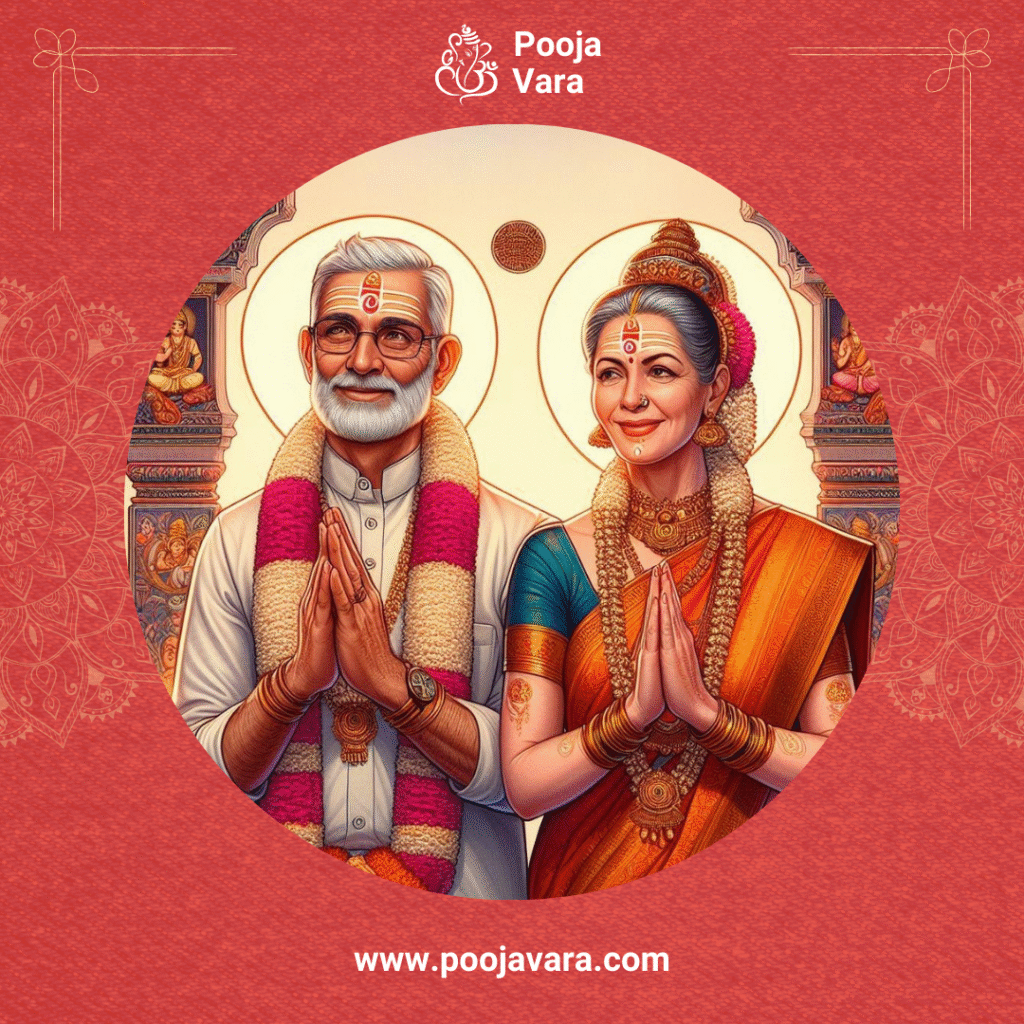
The word Sashtiapthapoorthi (Sanskrit: षष्ट्यब्दपूर्ति) comes from:
Sashti / Shashti – Sixty (60)
Abda / Aaptha – Years
Poorthi / Purnam – Completion
So Sashtiapthapoorthi literally means completion of 60 years of life.
It marks the moment when the Sun and the birth star return to the exact same position they were at the time of birth, completing a full astrological cycle. Symbolically, it represents the completion of the first phase of life (grihastha or householder stage) and the beginning of the second phase focused on spirituality, wisdom, and divine service.
In ancient Vedic times, life expectancy was considered around 100 years, divided into four stages called Ashramas:
| Stage | Age | Purpose |
|---|---|---|
| Brahmacharya | 0 – 25 | Learning & discipline |
| Grihastha | 25 – 50 | Family responsibilities & livelihood |
| Vanaprastha | 50 – 75 | Withdrawal from material duties, spiritual practice, mentoring younger generations |
| Sannyasa | 75 – 100 | Renunciation & self-realisation |
Thus, at 60, a person enters Vanaprastha, transitioning from material focus to spiritual pursuit, inner peace, and blessings for society.
Sashtiapthapoorthi is performed to celebrate this transition and seek divine blessings for a healthy, peaceful, and purposeful second innings of life.
The ceremony includes powerful Ayush Homam, which invokes divine energies for renewed health and vitality.
The couple performs Kalyana Utsavam (renewal of marriage vows), symbolizing beginning a new chapter together.
Special homams and chanting neutralize negative karma and protect against future challenges.
It honors ancestors, family, Guru, and divine forces for guiding life’s journey.
The elders bless the family, passing on wisdom, strength, and cultural traditions.
Ritual Name | Purpose |
|---|---|
| Ganapathi Homam | Removes obstacles and ensures successful ceremony |
| Navagraha Homam | Harmonizes planetary influences |
| Ayush Homam | Blessings for long life and good health |
| Mrityunjaya Homam | Protection from illness and negative forces |
| Kalasha Pooja | Invoking divine energy and purity |
| Kalyanam / Wedding ceremony | Renewal of marriage vows |
| Receiving blessings from elders | Spiritual transmission of positive energy |
Many families invite Vedic priests to perform Sashtiapthapoorthi pooja at home, temple, or wedding halls. Today, booking online Sashtiapthapoorthi pooja services has become very convenient.
It is traditionally performed when a person completes 60 years according to:
Tamil Calendar / Panchangam
Birth star (Nakshatra)
Tamil months like Aadi, Aavani, Thai are considered highly auspicious
For example:
If someone was born in Thiruvonam star, Sashtiapthapoorthi is celebrated when the star returns after the 60th year.
Home or nearest temple
Kashi, Rameswaram, Kanchipuram, Thiruvannamalai, Srirangam, Tirupati, etc.
Tip: Consult a Vedic astrologer or purohit to choose the best date based on horoscope.
Brings peace, harmony, and prosperity
Removes long-standing obstacles and fears
Strengthens family unity & relationships
Enhances inner happiness and mental clarity
Ayush homam revitalizes energy and pranic force
Helps reduce stress & negative influences
A spiritual restart for healthy living
Preserves Indian tradition for next generations
Inspires children about respect & values
Modern celebrations include:
🎉 Family gathering & feasts
📸 Photography, videography, music & cultural programs
🌸 Temple visits & charity activities
🤝 Giving food or donations to the needy
For families living abroad (USA, UK, Australia, Singapore), online puja arrangements and live video participation are common.
Sashtiapthapoorthi is not just a milestone birthday—it is a divine celebration of life, gratitude, blessings, and spiritual rebirth. It strengthens family love, enhances well-being, and honors timeless heritage. Performing this sacred ritual with devotion unlocks peace, prosperity, and divine protection for the years ahead.
👉 Planning to perform Sashtiapthapoorthi pooja?
Book experienced Vedic Priests & Homam services with complete support for venue, materials, and rituals.
✨ Make your Sashtiapthapoorthi a blessed and memorable occasion.
📞 Contact us today to make arrangements!
Sashtiapthapoorthi is a Hindu ceremony celebrating the 60th birthday, marking the completion of a major life cycle and beginning a spiritually focused phase.
Ayush Homam, Ganapathi Homam, Navagraha Homam, Kalasha Pooja, and marriage vow renewal ceremony.
It seeks blessings for long life, health, peace, spiritual progress, and family harmony.
Yes, it can be organized at home, temple, or wedding halls based on convenience.
