

Devata Kalyanotsavam is one of the most sacred and grand Hindu rituals performed in various temples across India, especially in South Indian traditions. It refers to the divine ceremonial wedding of deities, symbolizing the union of Lord Vishnu or Shiva with their consorts such as Lakshmi, Andal, Padmavathi, Parvati, or Bhu Devi. This holy ritual represents the eternal bond between the divine masculine and feminine energies, signifying prosperity, harmony, dharma, and universal balance.
Devotees believe that participating in or witnessing Devata Kalyanotsavam removes obstacles, strengthens marriages, resolves relationship issues, and invites blessings for happiness, peace, wealth, and fertility. Temples like Tirumala Tirupati, Bhadrachalam, Srisailam, Yadadri, Tiruchanoor, and Melkote are globally known for their grand celebrations of Devata Kalyanotsavam.
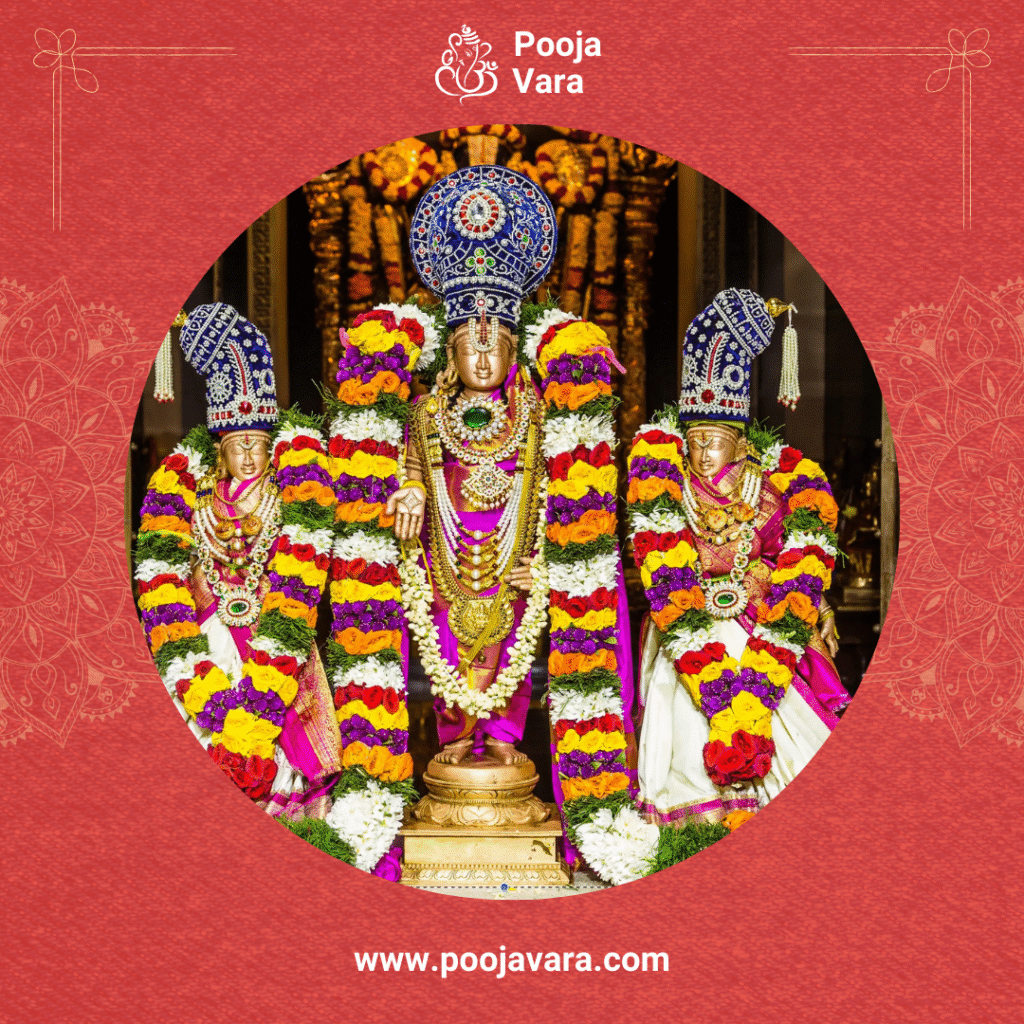
The term Devata Kalyanotsavam is derived from:
Devata – Divine deity or God
Kalyanam – Marriage
Utsavam – Festival or celebration
Together it means “The Divine Marriage Festival of Deities.”
This sacred ritual symbolizes:
The divine marriage signifies the powerful merging of:
Purusha (spirit) and Prakriti (nature)
Strength and Compassion
Devotion and Grace
The ritual holds deep spiritual, cultural, and astrological importance. It is believed that cosmic energy flows abundantly when divine energies unite, granting blessings to devotees.
Removes obstacles in life and career
Brings marital harmony and strengthens relationships
Blesses couples with fertility and healthy children
Brings peace, prosperity, wealth & good fortune
Helps overcome planetary doshas such as Kuja Dosha, Rahu-Ketu Dosha, Shani Dosha
Creates positive energy in the environment and home
Those seeking a suitable life partner participate in Devata Kalyanotsavam for:
Marriage opportunities
Removal of delay in marriage
Finding a compatible partner blessed by divine grace
The ritual is performed by trained Vedic Pandits following Agama Shastra, Pancharatra, or Shaiva traditions. The ceremony includes:
| Ritual Step | Description |
|---|---|
| Navagraha Puja | Planetary blessings for the ceremony |
| Punyahavachanam | Purification rituals |
| Sankalpam | Devotee’s intention and prayers |
| Alankaram (Divine Decoration) | Dressing and ornamentation of deities |
| Mala-Matrum | Exchange of garlands between divine couple |
| Mangalya Dharanam | Tying of sacred thread symbolizing marriage |
| Mantra Chanting & Vedic Hymns | Recitation of Vedic verses |
| Aarti & Prasadam Distribution | Blessings shared with devotees |
The celebration concludes with mangala harathi, where devotees receive divine blessings and prasadam.
Some of the most famous temples where this ritual is performed include:
Tirumala Tirupati Balaji Temple – Sri Venkateswara & Sri Padmavathi
Bhadrachalam – Sri Rama & Sita Kalyanam
Srisailam Mallikarjuna Temple – Shiva-Parvati Kalyanam
Yadagirigutta – Narasimha Swamy & Lakshmi
Ahobilam, Varanasi, Kanchi, Melkote, Udupi, Trivandrum
Many devotees also perform Devata Kalyanotsavam at home with the guidance of Vedic Pandits.
This ritual is highly recommended for:
Married couples seeking harmony and happiness
Couples facing relationship challenges
Individuals experiencing delay in marriage
Couples praying for children
Families wishing prosperity and peace
Business owners praying for success
Devata Kalyanotsavam is a deeply spiritual and powerful ritual that brings blessings, peace, and divine grace to devotees. Whether performed at temples or homes, it strengthens emotional bonds, removes life obstacles, and attracts prosperity and success. Participating in or sponsoring this ceremony is considered one of the most sacred acts that connect devotees directly with divine love.
Would you like to perform Devata Kalyanotsavam at home or temple with experienced Vedic Pandits?
📞 Contact us to book your Devata Kalyanotsavam Puja with complete Puja Samagri & guidance.
Devata Kalyanotsavam is the divine wedding ceremony of Hindu deities such as Lord Vishnu & Goddess Lakshmi or Shiva & Parvati, performed for prosperity & harmony.
Yes, it can be performed at home with Vedic procedures under the guidance of an experienced Pandit.
It removes obstacles, brings marital harmony, prosperity, fertility, and spiritual peace.
Typically, the ceremony takes around 1.5 to 2.5 hours depending on temple or home setup.
Puja samagri includes idols/photos of deities, flowers, fruits, mangalya thread, wedding clothes, turmeric, kumkum, kalash, rice, lamps, and coconuts.
